A Landing Place Changes the Shape of a Routine
A landing place for keys, bags, and everyday essentials can ease doorway decisions; choose a spot that fits your route and household habits.
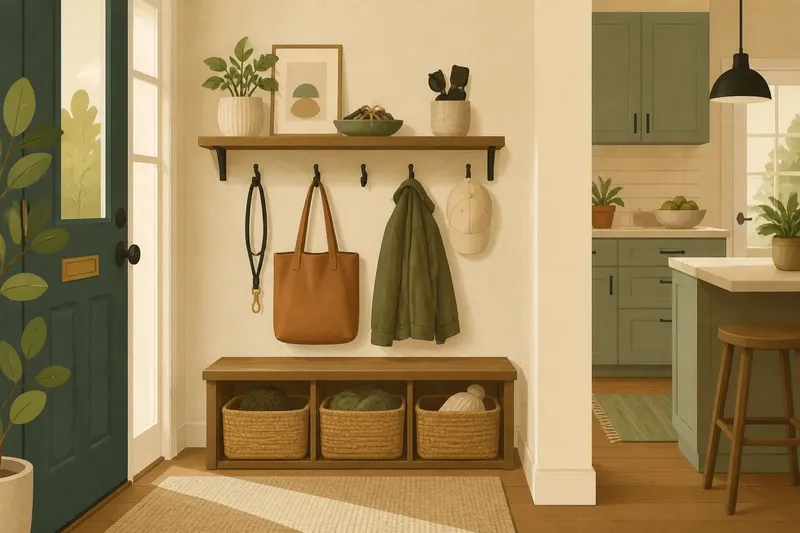
A landing place for keys, bags, and everyday essentials can make leaving home feel less like a last-minute search. The right spot sits along the route you already take, so putting things down and picking them up becomes part of crossing the doorway rather than a separate task.
When the arrangement fails, the cause is often a mismatch: the place is out of sight, too far from the natural path, or too small for what people actually carry. Treat each snag as information about the routine, not as evidence that everyone needs to try harder.
When the landing place is easy to forget
A tray tucked behind a door or a hook hidden in a closet may be tidy, but it asks for an extra turn or a remembered detour. If you set down your bag wherever your hands happen to be free, the location may be working against your movement through the room.
Notice the path from the entrance to the next place you usually go: the kitchen, bedroom, or coat closet. Choose a visible point on that route, such as a narrow console near the entry or a hook beside the door. Keep the spot in view without letting it block the door swing or the walkway.
Say you enter through the front door, pass a small wall shelf, and head straight to the kitchen. If your keys keep landing on the kitchen counter, try a shallow bowl on that shelf; the expected sign that the change fits is that you can put them down without breaking stride. If you still carry them onward, move the bowl closer to the point where your hand naturally empties.
When the surface collects everything
A landing place can become a miniature storage unit if it has no boundary. Receipts, mail, loose change, and objects waiting to be returned may cover the area until the items you need disappear from view.
Give the spot a narrow job. A small dish can hold keys and earbuds; a hook can take a frequently used bag; a basket can contain gloves or a folded reusable tote. Keep mail and items that need attention elsewhere, or give them a separate container with a clear purpose.
Think of the landing place as a doormat for objects: it catches what arrives, but it should not become a place where everything stays. If clutter returns, reduce the number of items assigned to the spot or choose a container that makes its limits visible.
When the whole household uses the same doorway
A shared entry can feel orderly to one person and inconvenient to another. The problem may be that everyone is expected to use one small bowl, one hook, or one unwritten rule about where things belong.
Assign a simple, visible place to each person’s most-used items. A row of labeled hooks, separate trays, or distinct sections in a basket can make ownership clear without requiring a household meeting every time someone comes in. Keep the arrangement understandable to guests and children as well as the person who set it up.
If people carry different things, avoid making every space identical. One person may need a hook for a work bag; another may need a low basket for a hat and mittens. The aim is a shared doorway with several obvious destinations, not one uniform system that fits nobody well.
When the items you need do not fit
A tiny dish works for keys and can fail as soon as a wallet, sunglasses, transit card, and charging case join the daily load. Items may spill onto nearby furniture because the landing place reflects an older version of the routine.
Watch what you carry across the threshold for several ordinary days, then make room for the recurring items rather than every possible item. A wider tray, a second hook, or a small divided organizer may solve the mismatch. Keep seldom-used belongings in their usual storage instead of expanding the landing place until it becomes a catchall.
Consider the size and shape of the area, too. A narrow hallway may suit wall hooks and a slim shelf better than a deep table; a roomy entry may accommodate a bench with a basket underneath. The best choice is the one that leaves the route comfortable while keeping essentials visible and reachable.
How do you choose a landing place that fits?
What belongs at the doorway?
Start with items you carry in and out often, such as keys, a daily bag, sunglasses, or a reusable shopping tote. Leave occasional tools and objects that need attention in a separate place so the doorway remains easy to read.
Should the landing place be inside or outside the entry?
Choose the side where you can use it without interrupting the route or leaving the door unsecured. A spot just inside the home is often convenient, but the best location depends on the entrance and the way you move through it.
What if there is no entry table or closet?
A wall hook, a small bowl on an existing shelf, or one section of a bookcase can work if it is visible from the doorway. The arrangement does not need dedicated furniture; it needs a stable, recognizable destination.
How can you tell whether the spot is working?
Notice whether you put items there naturally and can find them when leaving. If you keep setting something down elsewhere, change the location, capacity, or type of container instead of adding another reminder.
When the routine changes with the season
A landing place can stop fitting when weather or work habits change. Gloves and umbrellas may take over in colder or wetter months, while a different bag or pair of sunglasses becomes part of the regular exit routine.
Make a small seasonal adjustment rather than redesigning the whole entrance. Swap a light basket for one that holds bulkier accessories, or move an item that is no longer in regular use back to ordinary storage. Keep the everyday essentials in the most visible position.
For household items whose placement depends on a label, manufacturer instructions, or local rules, follow those directions rather than storing them at the doorway by default. For ordinary belongings, the simplest measure is whether each object has a clear place that matches how you enter and leave.
A landing place works best when it reflects the route you actually take, not the entrance you imagine you ought to have. If a key or bag keeps turning up elsewhere, let that repeated choice point toward a better spot; a small adjustment can make the next departure feel more settled.