Paper List or Shared Phone Note for Errands?
Paper list or shared phone note for errands? Compare access, visibility, and coordination to choose a format everyone can find and keep current.
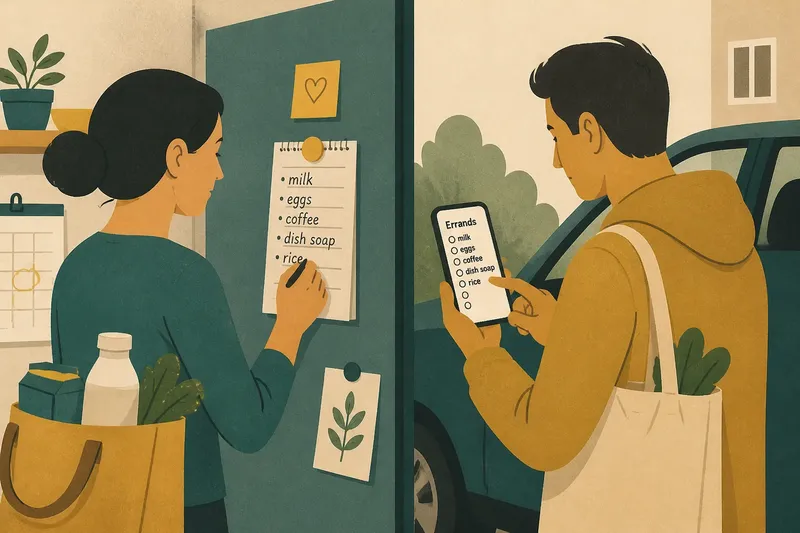
A paper list or shared phone note for errands works best when it fits the moment someone remembers a need. If one person notices the last of the coffee while another is already near the store, the useful format is the one both can check and update without starting a message chain.
The choice depends less on whether paper or a phone is superior than on who handles errands, where lists are seen, and how much coordination the household needs. A few practical considerations can help you settle on one format—or a modest combination—without adding a routine that is harder to maintain than the list itself.
Paper keeps a household list visible at home
A sheet on the refrigerator, a notepad by the pantry, or a small list beside the household calendar makes errands visible to people passing through. Someone can add dish soap while putting groceries away, and the next person in the kitchen can see it without opening an app.
This suits households where people share space but do not use the same device or list service. Its visibility is also its limit: a note left at home cannot help the person who has already driven away, and a list can disappear beneath mail if it has no dependable place to live.
Paper lets you scan the whole list without notifications, menus, or account settings. That can be useful for a brief errand and a list short enough to read at a glance.
A shared phone note travels with the shopper
A shared digital note can help when different household members shop at different times. One person can add rice in the morning; another can open the same note before leaving for the store rather than rely on a separate text that may be overlooked.
Sharing features vary by app, device, account, and software version. Apple Notes and Google Keep are examples of services that may support shared notes, but confirm the current sharing options and access requirements in the app you plan to use. The intended shoppers also need permission to open the same note and a clear idea of where to find it.
If one person keeps adding items to a private list while another checks a shared one, the phone has only moved the confusion onto a screen. A recognizable note name and one agreed location matter more than elaborate settings.
Access and visibility depend on where needs arise
Paper is easy to see for anyone near it, but only where it has been left. A phone note travels with its owner, yet other household members may not notice an update unless they open it or receive a notification.
Think about when an item is usually added. If someone notices a missing ingredient while cooking, a magnetic notepad on the refrigerator may take less effort than finding a phone and locating the right note. If the need comes up while someone is already out, a shared phone note is more accessible than a paper list at home.
Seeing a list and remembering to check it are different things. A bright sheet clipped beside the grocery bags may be hard to miss when leaving the kitchen. A phone note may be easier to carry, but only if the shopper knows it contains the current list. It is like a wall calendar: visible to people in the room, but not much help once they leave.
Agree on how shoppers update the list
Coordination matters when more than one person can add, buy, or remove items. One paper list is simple while it stays in one place; it becomes less dependable if someone takes it shopping and another person continues adding items to a separate scrap at home.
A shared note gives multiple people one place to update, but the household should agree on what happens after a purchase. Decide whether to delete an item, mark it complete, or leave it visible until the shopper returns. Otherwise, a check mark might mean “bought,” “in the cart,” or only “seen.”
For an occasional errand handled by one person, coordination features may not matter much. When partners, roommates, or older children take turns shopping, a common list can reduce the need to ask what has changed.
Match the format to the way you shop
A paper list can be comfortable for a quick visit to a familiar store. It is easy to cross out an item and add a reminder such as “check the cupboard first.” It may be less convenient if the trip involves several stops or someone adds items after the shopper leaves.
A phone note can be grouped under headings such as produce, pantry, and household supplies, if the app supports a layout that suits you. Categories can help with a longer list, but they are not automatically useful. If maintaining them takes more attention than writing the list, plain text may be simpler.
Say two roommates usually shop together on Saturday, but sometimes make separate trips. They start with a shared phone note for items either person may pick up, then copy the planned Saturday groceries onto a paper list for that outing. Afterward, they compare the paper with the shared note and discard the copy; the result is that the shared note remains the source for new additions, while the paper served only the joint trip.
Make it easy to recover a misplaced list
Paper can be misplaced, thrown away with a receipt, or left in a coat pocket. A digital note can be buried among unrelated notes, become unavailable when a device is out of reach, or be shared with the wrong account. Either format needs a recognizable home.
For paper, choose a familiar spot and use one sheet rather than several loose notes. For a phone, use a distinctive title such as “Errands” and pin or favorite it if the app offers that option. A clear name is more useful than a complicated folder system when several people need to find the note quickly.
If the list contains only a few recurring items, a small paper pad may be easy to restart. If several people contribute throughout the week, a shared note may be easier to maintain than merging scraps. Consider which kind of mix-up causes less disruption in your household.
Use both formats only when each has a separate job
Paper and a phone note can work together, but they should not become competing versions of the same list. One can be the ongoing household list, while the other is a temporary copy for a specific shopping trip. Decide which one holds the latest changes before relying on both.
For example, keep the shared phone note as the running list and make a paper copy only when someone wants to shop without checking a screen. After the trip, discard the paper or update the shared note from it. That keeps a one-off convenience from turning into a second list that quietly goes stale.
If you rarely need to coordinate, one format is usually easier to understand. If you combine them, make their roles clear to everyone who shops: one is the ongoing source, and the other is only for the current outing.
Which errand-list format fits your household?
Is paper or a shared phone note better for roommates?
Either can work, depending on where roommates notice household needs and whether they shop together. A shared note may suit separate trips; a visible paper pad can be simpler when everyone passes through the same kitchen.
How can I keep a shared grocery note from becoming confusing?
Choose one shared note, give it a recognizable name, and agree on what happens to an item after someone buys it. Keep the list plain unless categories make shopping easier for your household.
What if one person does not use the same phone or app?
Use a format everyone can access, or keep the household list on paper in a place all shoppers know. If a digital note depends on an account or device someone does not use, it is not shared in a useful sense.
Can a paper list and a digital note work together?
Yes, if one is clearly the ongoing list and the other is a temporary shopping copy. Avoid adding changes independently to both, because shoppers may not know which version is current.
For a paper list or shared phone note for errands, let the household’s actual pattern decide: where needs are noticed, who shops, and how often plans change. Start with the format people already reach for, then check whether everyone can find the current list when it matters. If not, change the list’s location or confirm the sharing setup before adding another tool.