From Pocket Watch to Wristwatch: Timekeeping Becomes Personal
From pocket watch to wristwatch, timekeeping moved from a carried object to a visible accessory; see which form fits your habits and personal style.
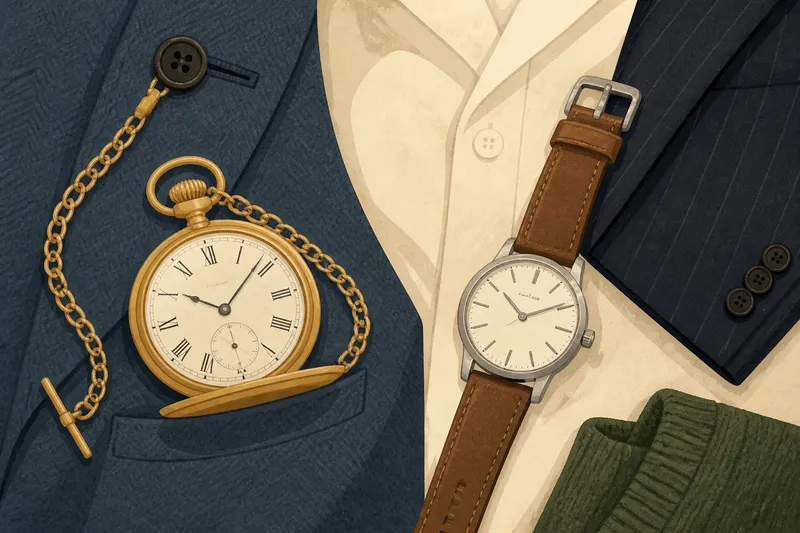
A pocket watch asks for a small pause: reach into a pocket, draw it out, open the case, and check the time. A wristwatch keeps that glance in view. The shift from pocket watch to wristwatch changed more than convenience; it brought timekeeping into the silhouette of an outfit and made the watch a daily choice about how to appear.
Neither form is simply more personal or more practical. The better fit depends on what you wear, how often you need to check the time, and whether you want a timepiece to be noticed. Think of the difference as a notebook in a bag versus a note pinned to a jacket: both hold useful information, but one stays tucked away while the other becomes part of the visible arrangement.
Choose a pocket watch when the act of checking time should stay private
A pocket watch suits someone who enjoys a deliberate gesture and wears clothes with a place for it. A waistcoat pocket, a coat pocket, or a dedicated trouser pocket can keep the watch close without adding anything to the wrist. The chain, when used, becomes part of the clothing rather than a strap around the arm.
This form often works best with tailored or heritage-inspired dressing. A chain can connect the watch to a waistcoat buttonhole, while a simple case can sit quietly beneath a jacket. The watch is not invisible, but its appearance is controlled: it emerges when you choose to consult it, then returns to the pocket.
That privacy has a practical cost. You need a free hand and a suitable pocket, and gloves or bulky outerwear can make the motion less convenient. If you spend the day moving between tasks that call for quick glances, the pocket watch may feel like an interruption rather than a pleasure.
Choose a wristwatch when time belongs in the outfit
A wristwatch is the natural fit for someone who checks the time often or wants a visible accessory to anchor a look. The dial sits where a brief glance can reach it, and the strap adds color, texture, and shape. Leather tends to read as composed; a metal bracelet can feel sharper; fabric or rubber may look more relaxed.
Because it stays on the body, a wristwatch can become part of how a person dresses even when it is not being checked. A slim case can disappear under a shirt cuff, while a larger or more colorful one makes a clearer statement. The choice is not only about the watch itself but also about how much attention the wrist should attract.
There are tradeoffs. A watch may catch on a cuff, feel noticeable during typing, or compete with bracelets and rings. People who prefer bare wrists may find that the convenience does not outweigh the sensation. A watch should feel like a considered part of the outfit, not a piece that must be constantly adjusted.
Match the form to the clothes you actually wear
Start with the clothes that make up an ordinary week, not an imagined special occasion. If jackets and waistcoats are common, a pocket watch may fit without requiring a new wardrobe. If most days involve shirts, knitwear, and sleeves that shift throughout the day, a wristwatch may be easier to incorporate.
Consider the visual line as well. A pocket watch leaves the wrist open and can keep a formal outfit from feeling crowded with accessories. A wristwatch can give simple clothes a point of focus, especially when its strap echoes a belt, shoes, or another small detail without matching them too literally.
- Choose a pocket watch if you regularly wear garments with a secure, comfortable pocket and enjoy a visible chain or a private check of the time.
- Choose a wristwatch if quick glances matter and you want the watch to contribute directly to your outfit.
- Consider neither as an everyday piece if a watch feels distracting or your usual clothing gives neither form a comfortable place.
- Try a simpler design if you want a timepiece to blend in rather than become the main accessory.
Say you wear a jacket most weekdays but spend weekends in soft, pocket-light clothes. A modest pocket watch could suit your work outfits, while a slim wristwatch might be easier on casual days; the observable result would be a timepiece that fits each setting instead of forcing one format into every outfit.
Think about how visible you want your habits to be
A wristwatch broadcasts its presence before anyone notices its function. It can suggest precision, restraint, playfulness, or an interest in traditional accessories, depending on its shape and finish. A pocket watch keeps that signal quieter and makes the act of checking the time a small performance that is mostly for the wearer.
This distinction matters if you use a watch to manage social moments. At a dinner table, repeatedly turning the wrist to check the time may read as impatience, even if the intention is simply to stay on schedule. A pocket watch can make the check less conspicuous, though drawing it out still calls attention to the gesture.
Neither object determines good manners. The useful question is whether the way you consult time suits the setting. In a meeting, a quick glance at a wristwatch may be less disruptive than retrieving a watch from a pocket; at a formal gathering, a restrained pocket watch may feel more in keeping with the clothes.
Which timepiece fits the way you dress?
Is a pocket watch practical for everyday wear?
It can be practical if your clothing gives it a secure pocket and you are comfortable taking it out when needed. If your usual outfits have no suitable pocket, carrying one may become an extra task rather than a satisfying habit.
Does a wristwatch work with casual clothes?
Yes, provided the case and strap suit the clothes rather than overpower them. A plain dial with a leather, fabric, or understated metal strap can sit comfortably beside jeans, knitwear, or a casual shirt.
Can a pocket watch feel personal rather than costume-like?
Yes; keep the rest of the outfit simple and let the watch be one deliberate detail. A subtle case and restrained chain often feel more at ease than several period-inspired pieces worn together.
Should a watch match other accessories?
It can share a tone or material with a belt buckle, shoes, or jewelry, but exact matching is not necessary. A repeated detail is usually enough to make the choices feel related without making the outfit look arranged around a set.
Let comfort settle the final choice
Before settling on a format, notice how it behaves during the parts of the day you actually live. A wristwatch should not pinch beneath a cuff or distract you at a desk. A pocket watch should sit securely and be easy to reach without tugging awkwardly at the garment.
Also consider what you want the object to mean. A watch may mark a personal style preference, carry family associations, or simply be the most natural way for you to keep time. Those meanings can coexist with practical concerns, but they do not need to be explained to anyone else.
From pocket watch to wristwatch, timekeeping became more visible as it moved from a pocket to the arm, but visibility is not the same as suitability. Choose the form that works with your clothes, your gestures, and the amount of attention you want it to draw. If the choice remains uncertain, wear each style with an ordinary outfit and notice which one you stop thinking about; that quiet ease is often the clearest sign of fit.